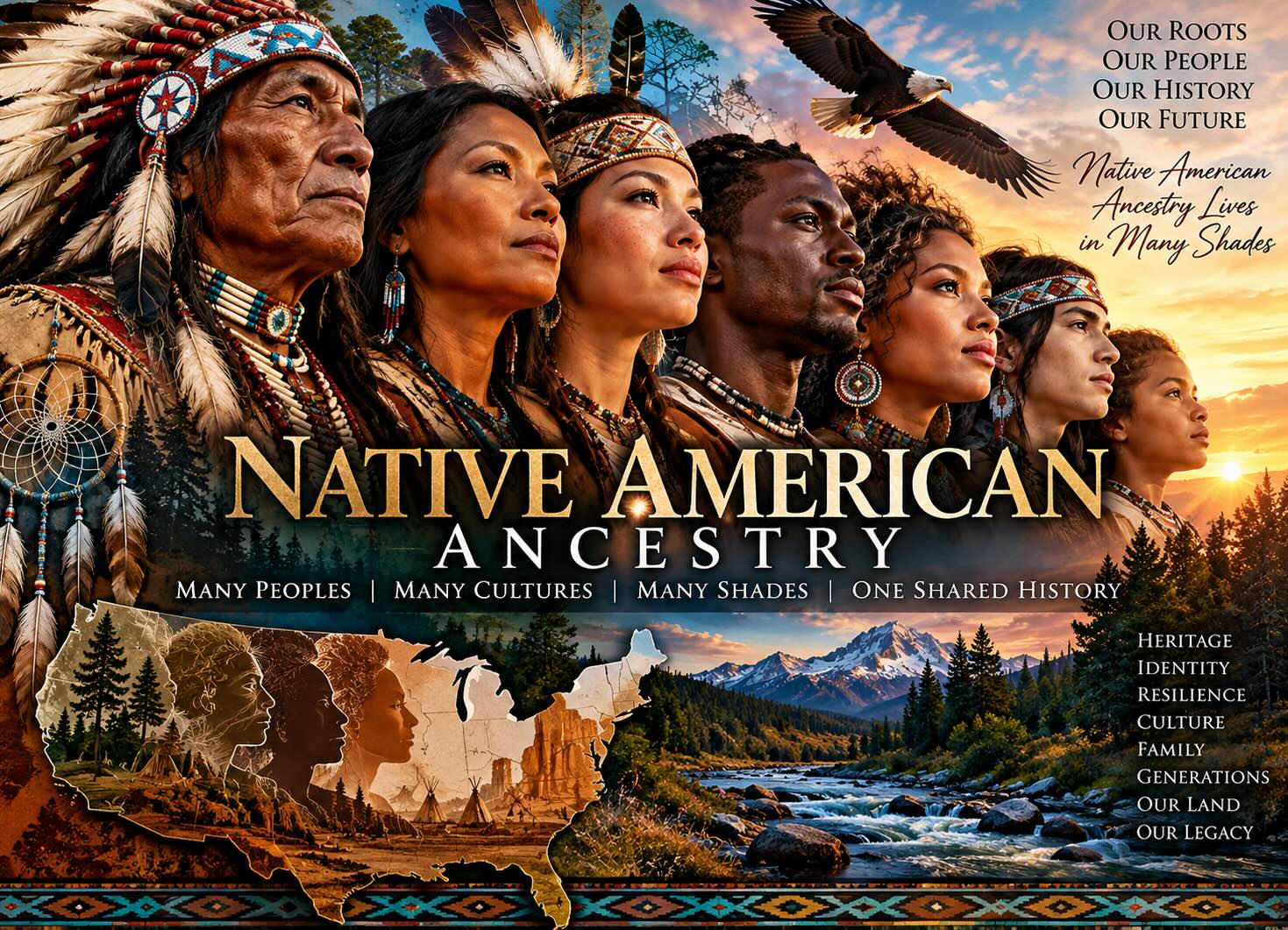

California is celebrating an important new chapter in recognizing Native American history, culture, families, heritage, and generations of contributions to the state.
Governor Gavin Newsom signed Assembly Bill 1841 in September 2026, establishing California Native American Day as an official state holiday and creating provisions for it to become a paid holiday for state employees, subject to legislative funding.
Observed on the fourth Friday of September, California Native American Day provides an opportunity not simply to celebrate, but to reflect on heritage, family, ancestry, identity, and the importance of understanding where we come from.
For Californians and Americans throughout the country, this recognition carries a meaningful message: our heritage matters, our family histories matter, and every person deserves the opportunity to understand and accurately document their cultural roots.
Knowing Who We Are and Where We Come From
America is made up of generations of families whose histories cross states, communities, cultures, and centuries. For many families, discovering their heritage requires looking beyond what may have been written on a single document.
Historical records, family photographs, birth and death certificates, census documents, marriage records, military records, family Bibles, oral histories, genealogy research, and stories passed down through elders can provide important pieces of a family’s history.
This is especially meaningful for Black American families whose histories on this land extend across generations, including family histories reaching into periods before the formation of the United States. The histories of Black Americans are diverse and complex. Some families have documented Native American ancestors and longstanding connections to Native communities, alongside African and other ancestry.
Historical racial terminology has also changed dramatically over time. Words such as “Aboriginal,” “Indian,” “Native,” “Negro,” “Colored,” “Black,” and “African American” have appeared in different historical contexts and records. These classifications make family-by-family genealogical research especially meaningful for people seeking to understand exactly how their ancestors identified, where they lived, and what communities and cultures shaped their lives.
For some Black American families, deeper genealogical research has uncovered Native American ancestors, family traditions, and cultural connections that were not fully understood by later generations.
That is why knowing your history can be empowering.
Families with roots in Virginia, Mississippi, Tennessee, Kentucky, the Carolinas, and other parts of the South participated in generations of migration throughout America. Many eventually moved north and west, including to California, carrying family traditions, stories, photographs, documents, and memories with them.
Native American Day Creates an Opportunity to Learn
California Native American Day provides an opportunity for everyone to learn more about the Native peoples whose histories are deeply connected to California and America.
It is also a moment to recognize Native communities for their cultural traditions, leadership, creativity, resilience, entrepreneurship, environmental knowledge, family legacies, and contributions to American life.
The holiday can inspire families to begin asking important questions about their own histories.
Four important takeaways include:
- Celebrate Native heritage: California Native American Day creates greater statewide recognition of Native American history, cultures, communities, and generations of contributions.
- Research your family history: Speak with parents, grandparents, elders, and extended family members and preserve the stories, photographs, documents, names, locations, and traditions they remember.
- Explore historical records: Genealogy, census records, vital records, archives, birth certificates, marriage records, and family documents can help connect generations and reveal information that may have been overlooked.
- Preserve discoveries for future generations: Documenting family history gives children and grandchildren an opportunity to understand the people, places, cultures, and experiences that shaped their families.
A Personal Journey of Heritage and Discovery
For Lifestyle Elevation Media Foundation, this conversation has become especially meaningful through the personal journey of our Executive Director, Lela, publisher of the organization’s digital magazine hub.
Lela discovered Native American roots within her family’s history, extending across over ten generations.
Her genealogical journey led through family histories connected to Virginia, Mississippi, Tennessee, and Kentucky, as she worked to better understand the ancestry and cultural heritage carried through generations of her family.
The research was not something completed overnight. It involved years of examining ancestry, family history, records, and documentation. Lela ultimately pursued changes through Vital Records after determining that the racial and cultural information reflected on her original birth record did not accurately represent the heritage documented through her research.
She also obtained certifications and tribal identification cards connected to the Native heritage and tribal affiliations identified through her family’s lineage.
For Lela, the experience represents something larger than one person’s genealogy. It demonstrates why families should preserve their histories and why individuals should feel empowered to research the generations who came before them.
Preserving History for the Next Generation
The story is particularly relevant for Black American families whose roots in America stretch back for generations. Family histories can contain extraordinary stories of migration, cultural connection, survival, community, and ancestry that deserve to be researched and preserved.
Learning those stories begins with asking questions:
Who were our grandparents and great-grandparents? Where were they born? Where did their parents live? What communities did they belong to? What traditions did they preserve? What did older generations tell us about where our family came from?
These questions can open doors to extraordinary discoveries.
For Lela, documenting her Native American family heritage also became an opportunity to preserve that knowledge for her sons and future generations. What began as genealogical research ultimately became a journey of cultural discovery, documentation, identity, and family legacy.
A Celebration of Heritage
California Native American Day represents more than a new holiday. It offers an opportunity to celebrate Native Americans while encouraging families everywhere to understand, research, document, and preserve their cultural heritage.
History lives not only in textbooks and museums. It also lives inside families—in photographs, records, traditions, stories, oral histories, and memories passed from one generation to another.
California’s recognition of Native American Day reminds us that understanding our past can strengthen our connection to the present while ensuring future generations know the stories of those who came before them.
Know your family. Know your history. Preserve your records. Celebrate your culture. Honor your ancestors. And give future generations the opportunity to understand their heritage.
Report By Jene Knowles